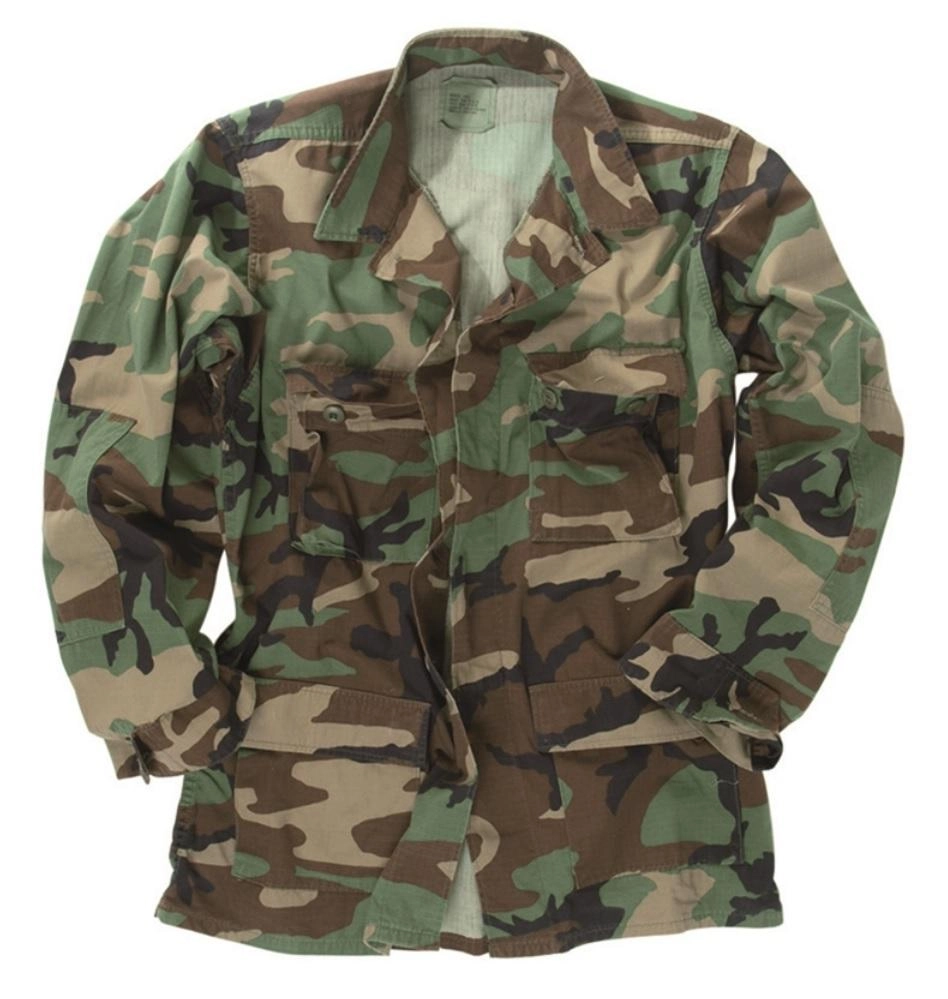
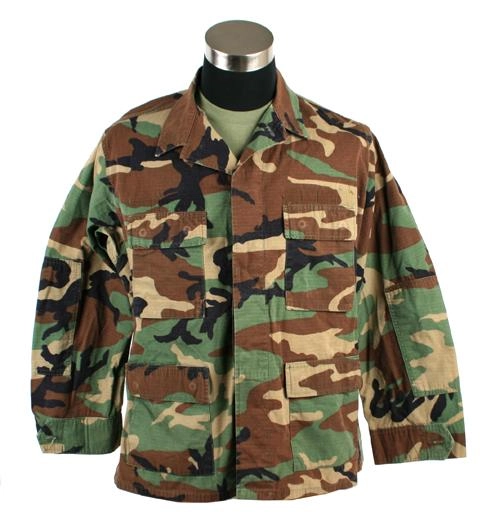
USGI M81 BDU service uniform jacket, surplus - woodland
USGI woodland service uniform jacket
Original US Army BDU (Battle Dress Uniform) jacket with traditional woodland pattern. The jackets may have different insignia or the insignia has been removed/not even sewn in place yet. The jacket has a button closure and four large pockets. The cuffs have tightening buttons. There is double fabric on the elbows to extend the life of the jacket. All button closures on the jacket are equipped with fabric flaps and are not visible and will not catch on equipment or branches.
The material is mainly a cotton-nylon blend (50/50). The material proportions may vary, due to several different manufacturers and production batches. There may be old-style cotton jackets, ripstop versions and some with back tightening buttons. We do not differentiate.
The jackets are genuine, slightly used, but intact US military surplus, made in the USA.
History
The United States Battle Dress Uniform (BDU) was the standard field uniform of the United States Armed Forces from the early 1980s to the mid-2000s. It was introduced in September 1981 and quickly became widely used by all branches of the military - from transnational operations to everyday military operations.
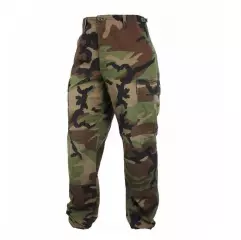
The suit was designed to be durable, comfortable and functional. It was initially made of cotton, but later the durability was improved by using a blended fabric. The pattern of the suit is a six-color camouflage pattern. The knees, elbows and the back of the trousers were reinforced for increased durability.
The United States Marine Corps initially wore BDUs without nameplates, officially calling them "camouflage utility uniforms" (CCU). In 1991, authorities began adding nameplates to align with NATO requirements; in 1992, this became mandatory. The BDU was later replaced in field use by new uniforms - including the six-color DBDU ("chocolate chip") and the three-color Desert Camouflage Uniform (DCU) - but the Woodland pattern remains popular in civilian and field use, and has in turn inspired later patterns such as Cryen's MultiCam.
Review summary
Total 0 reviews
- 0%
- 0%
- 0%
- 0%
- 0%

USEFUL INFORMATION
CUSTOMER SERVICE
asiakaspalvelu@milgear.fi
Business customers, authorities and reseller enquiries:
myynti@milgear.fi
MILGEAR PICKUP POINT
90100 OULU
Order pickups:
Tuesday – Friday
12:00–17:00
Special opening hours:


