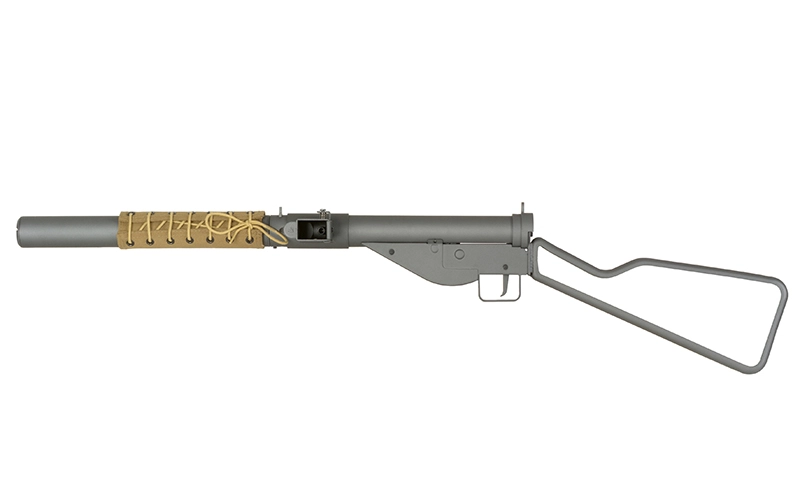
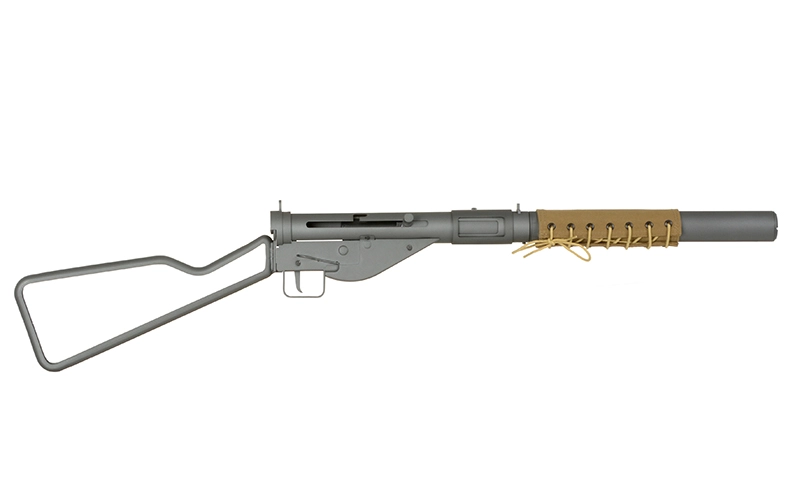
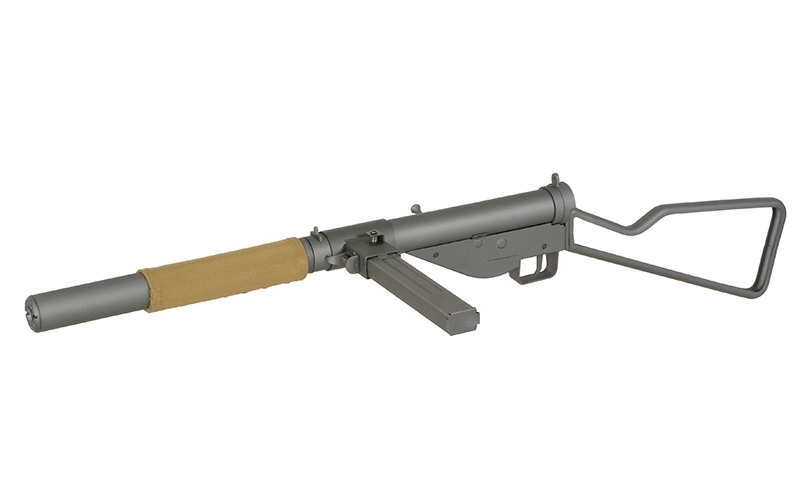
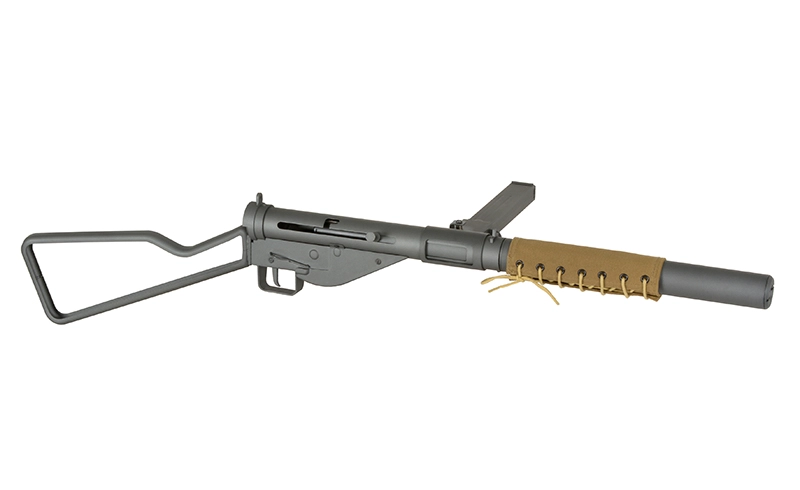
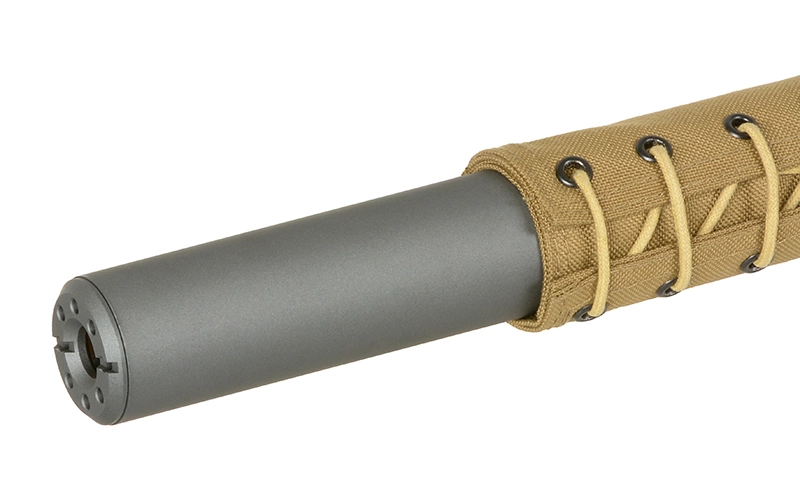
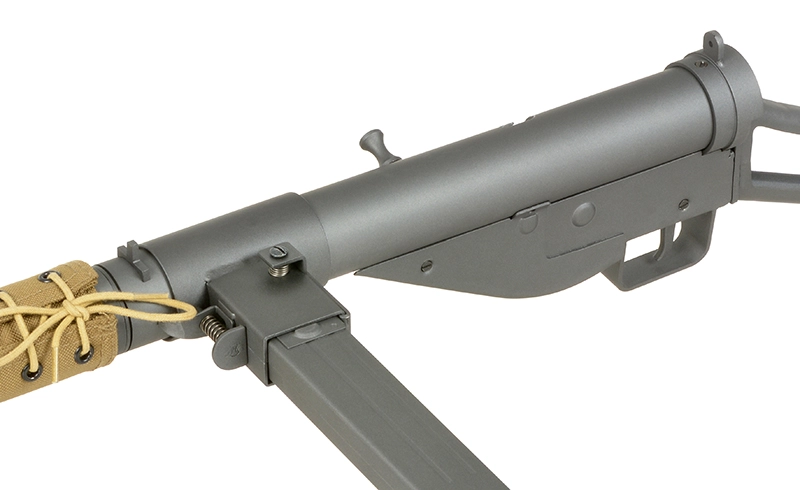
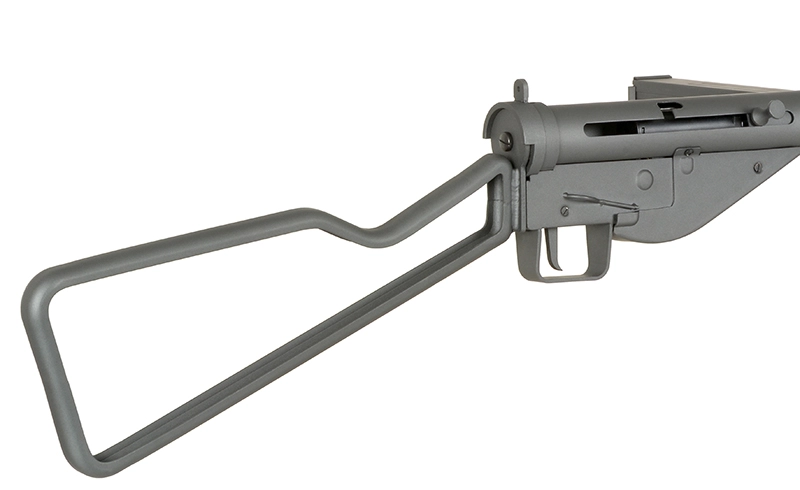
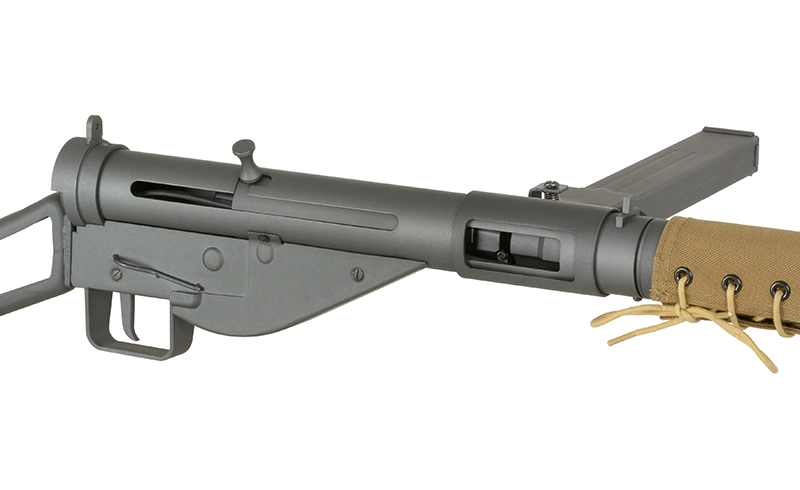
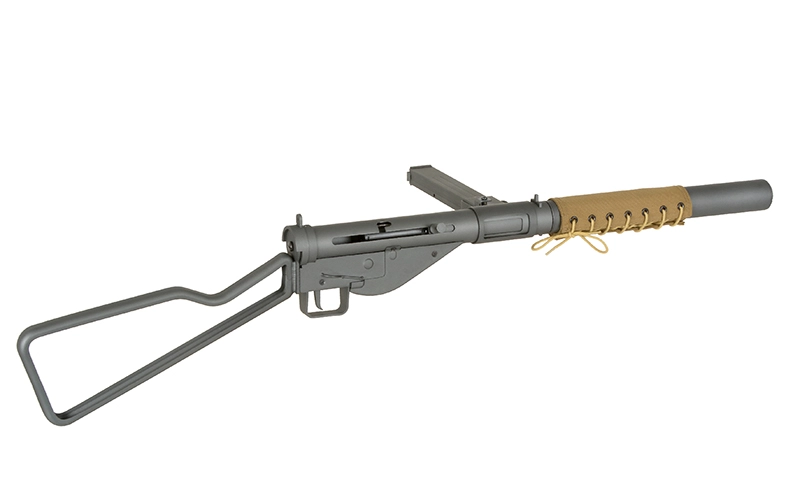
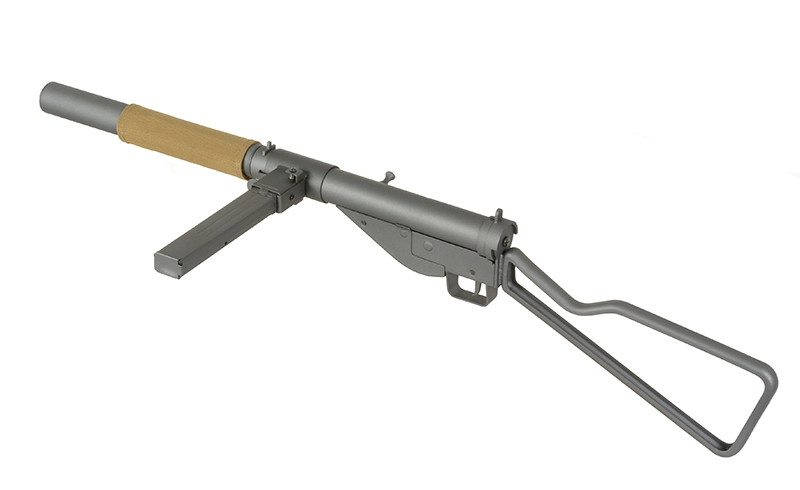

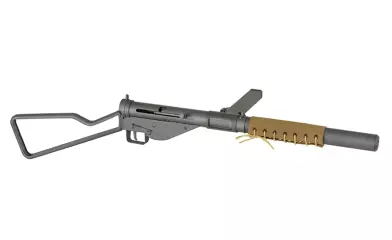



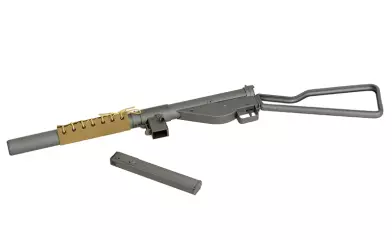

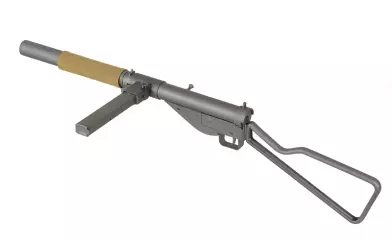
AGM STEN Mk II(S) Special Purpose AEG, Loop Stock
Subscribe to a restock notification via email, and you will be notified as soon as the product is available again.
- Full steel construction with aluminum suppressor
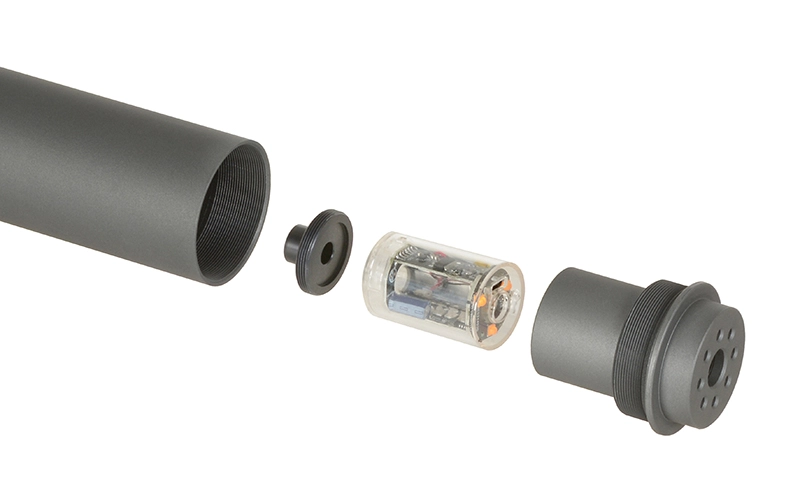
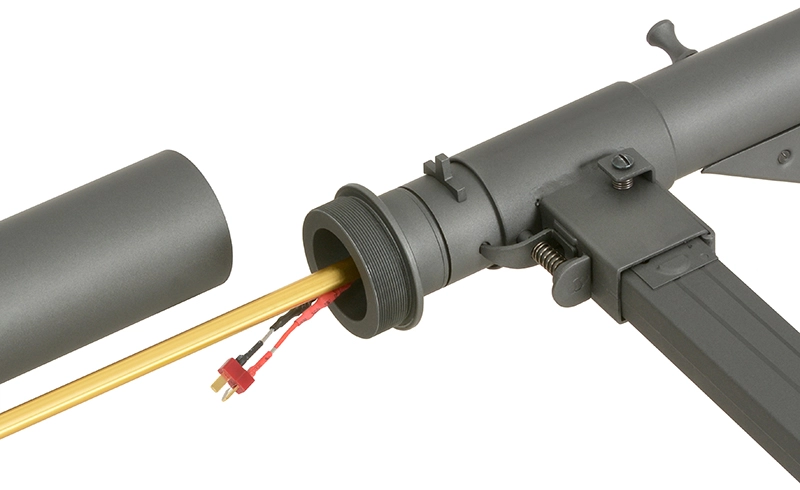
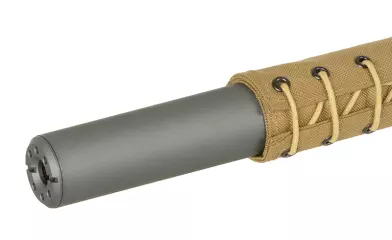
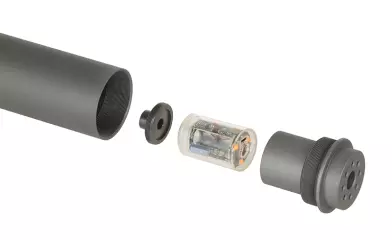
- Integrated suppressor with removable tracer unit and muzzle flash effect
- Adjustable hop-up system
- Version 7 gearbox
- 6 mm slide bearings
- 6.02 mm precision inner barrel, 330 mm length
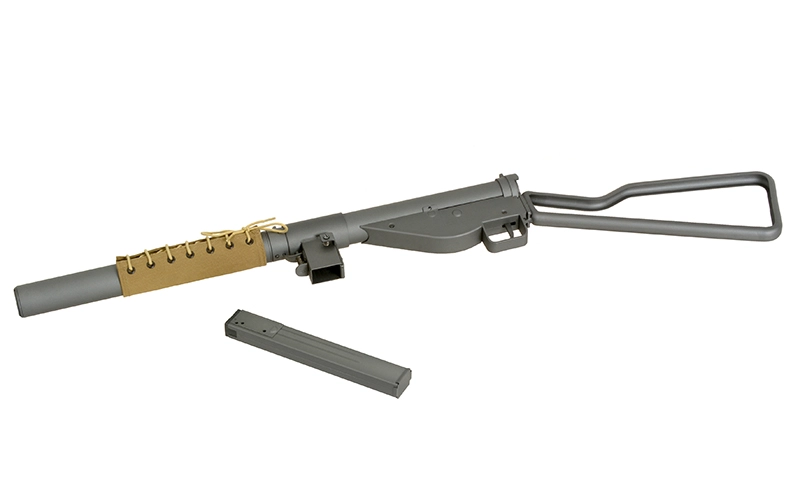
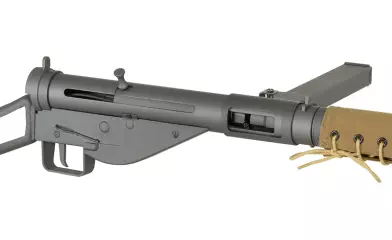
- Rotatable magazine well for storage and transport
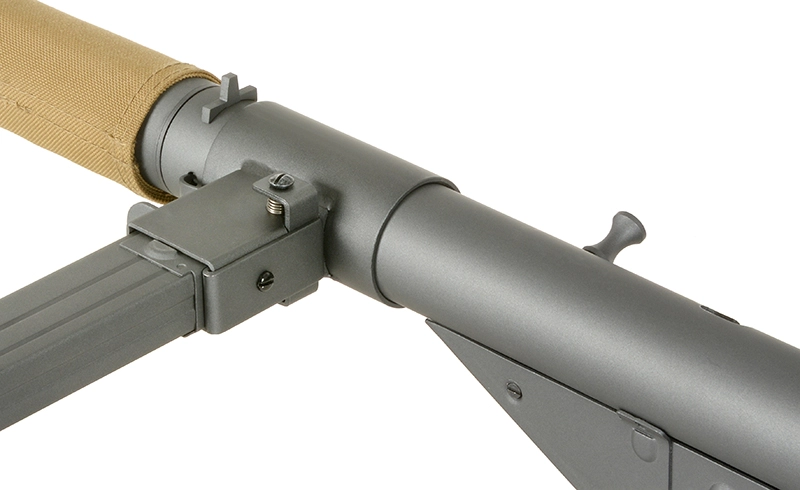
- Side-mounted magazine design
- Full-auto only operation
- Front-wired with Deans (T-connector)
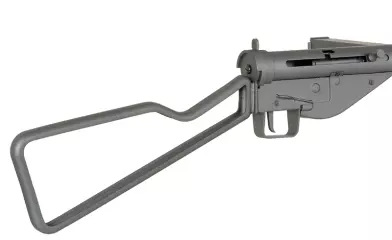
- Loop stock configuration
- Serial number: yes
- Length: 965 mm
- Weight: 2660 g
- Material: steel, aluminum
- Magazine type: mid-cap
- Magazine capacity: 130 BBs
- Hop-up: adjustable
- Gearbox: version 7
- Bearings: 6 mm slide bearings
- Inner barrel length: 330 mm
- Inner barrel diameter: 6.02 mm
- Muzzle energy: 1.55 J
- Muzzle velocity: approx. 125 m/s (0.20 g)
- Connector: Deans (T-connector)
- Battery: not included
- Recommended BBs: 0.25 g, 0.28 g, 0.30 g
- AGM STEN Mk II(S) Special Purpose AEG
- Low-cap magazine
STEN Mk II(S) – use and historical context
The STEN Mk II(S) was developed specifically for special operations and was primarily used by British SOE (Special Operations Executive) units and Commandos. It was designed for covert missions such as sabotage, reconnaissance, and close-range eliminations behind enemy lines.
It saw extensive use across occupied Europe, particularly in France, where it was also supplied to resistance fighters. The suppressed design allowed operators to neutralize targets with a reduced sound signature, making it well suited for clandestine work.
The weapon was also used in Northern Europe during World War II, including operations in Norway, as well as in Southeast Asia and the Pacific, where Allied special forces operated in jungle and occupied territories.
The STEN Mk II(S) remained in service beyond WWII, seeing use into the 1960s in regions such as the Cambodia–Vietnam border during covert operations. It was also adopted by various special units in Asia in the decades that followed, showing that the concept remained practical long after its introduction.
Overall, the STEN Mk II(S) was one of the earliest widely used suppressed submachine guns in special operations, and it helped shape the development of later platforms such as the MP5SD.
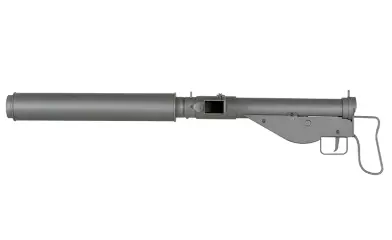
AGM STEN Mk II(S) Special Purpose AEG, Commando Grip
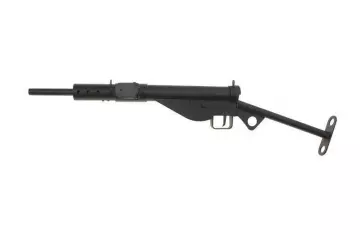
AGM 058 Sten Mk2 AEG submachine gun, metallic - black
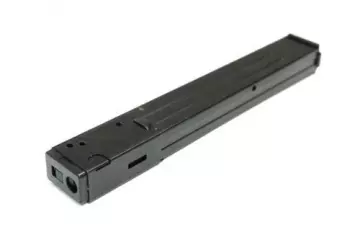
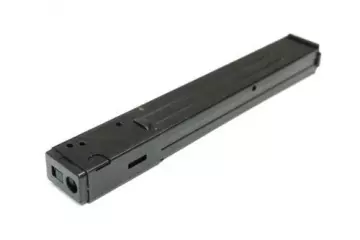
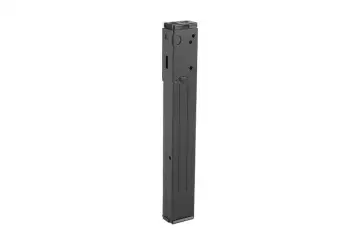
AGM MP40 MP007 / Sten 058 midcap magazine, metal - 120
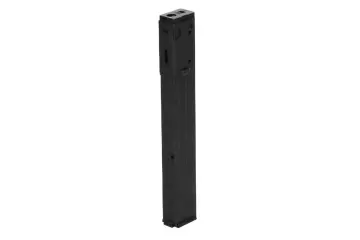
Specna Arms MP40 / Sten / M12S Mid-Cap Magazine - 120 BBs
Review summary
Total 0 reviews
- 0%
- 0%
- 0%
- 0%
- 0%

USEFUL INFORMATION
CUSTOMER SERVICE
asiakaspalvelu@milgear.fi
Business customers, authorities and reseller enquiries:
myynti@milgear.fi
MILGEAR PICKUP POINT
90100 OULU
Order pickups:
Tuesday – Friday
12:00–17:00
Special opening hours:


